
Acroview technology
NAND Flash Supply Constraints: The Role of Tri-Temperature Reliability Testing in Production Quality
IDC projects that global data volume will exceed 527 ZB by 2029. The growing adoption of generative AI and edge inference devices is driving higher volumes of data generation and storage, reshaping the global supply-demand balance for memory.
The current storage shortage is not simply another phase of the traditional semiconductor cycle. It reflects a structural reallocation of wafer capacity toward higher-margin memory products, creating a widening gap between high-capacity storage for data centers and lower-capacity embedded Flash for edge applications.

A Structural Shift in NAND Capacity
On the supply side, Samsung, SK hynix, and Micron are expanding capacity for High Bandwidth Memory (HBM) and enterprise SSDs. The higher margins associated with these products are encouraging memory manufacturers to allocate more advanced wafer resources to high-end storage applications.
Approximately 70–80% of advanced capacity is being directed toward high-capacity storage for data centers, placing additional pressure on the supply of 4 GB to 32 GB embedded Flash devices. TrendForce data indicates that global Multi-Level Cell (MLC) NAND Flash capacity is expected to decline by 41.7% year over year in 2026, with no large-scale capacity expansion planned in the near term.
The resulting supply contraction has created a significant imbalance in the embedded storage market. Lead times for lower-capacity eMMC devices have extended to 26–52 weeks, while prices for some low-capacity Flash products have increased by more than 300%. Memory manufacturers are prioritizing supply for cloud service providers and major automotive customers, making it increasingly difficult for companies serving AIoT, industrial, and automotive embedded applications to secure long-term capacity. Spot-market premiums and order delays may persist for another two to three years.
Demand is increasing at the same time. Global AI server shipments are projected to grow by 180% year over year in 2026, with NAND consumption per AI server estimated at approximately three times that of a conventional server. Meanwhile, the broader adoption of AI across industries has driven three consecutive years of rapid growth in edge devices, including automotive T-Boxes, industrial edge controllers, portable AI cameras, and intelligent voice terminals.
The industry-wide supply-demand gap continues to widen, with the NAND Flash deficit expected to remain at approximately 4–5% in 2026. TrendForce has also reported continued supply tightness in NAND Flash and expects market conditions to improve in the second half of 2027.
The current shortage is not simply a matter of insufficient overall wafer capacity. Higher strategic priority is being given to DRAM, which continues to constrain wafer allocation for NAND and limits large-scale NAND capacity expansion. While supply and demand are expected to move toward balance in the second half of 2027, the structural divergence between high-capacity cloud storage and lower-capacity embedded storage at the edge is expected to persist.
Reliability Screening Under Supply Constraints
In an environment of constrained material availability, elevated costs, and rapid technology iteration, maximizing the utilization of available NAND devices is becoming an increasingly important capability across the supply chain. For embedded storage used in automotive, industrial, and AIoT applications, reliability screening is a critical part of production quality control.
NAND Flash stores data through the electrical state of its memory cells. Charge leakage, program/erase wear, and process variation can all affect device stability, while temperature is a particularly important factor in NAND reliability.
Extreme temperature conditions can degrade charge-retention characteristics and increase bit error rates (BER). The stacked structure of 3D NAND can further amplify the effects of temperature variation. Under temperature-varying conditions, this can contribute to voltage drift, abnormal read behavior, and, in severe cases, data loss.
Room-temperature testing alone cannot reproduce the wide temperature conditions encountered in automotive and industrial applications. As a result, certain temperature-dependent or latent failures may remain undetected during conventional screening.
Tri-temperature reliability testing addresses this limitation by combining controlled low-, ambient-, and high-temperature conditions with electrical stress to accelerate aging and expose latent device failures.
Application-Specific Reliability Requirements
Test conditions vary significantly across application segments. Consumer-grade devices typically target an operating range of 0°C to 70°C, while industrial-grade applications commonly require operation from -40°C to 85°C. Automotive-grade semiconductor devices are subject to different temperature grades under AEC-Q100, with applicable operating ranges extending to -40°C to 150°C depending on the grade. Automotive applications also impose stringent quality and defect-control requirements.
A standardized tri-temperature test process can combine four key stages: temperature control, electrical stress aging, data acquisition, and device classification. The process identifies devices that fail the required conditions while classifying usable devices according to their measured characteristics. This provides a basis for matching available NAND devices with the requirements of different applications and making more effective use of available Flash resources.
Overcoming Bottlenecks in High-Volume Reliability Testing
Although the value of tri-temperature reliability testing is well established, scaling the process to high-volume NAND production presents several practical challenges.
The first is temperature-control accuracy. If the test environment cannot maintain the required thermal conditions with sufficient precision and stability, temperature-dependent latent failures may not be effectively exposed. Devices that pass inadequate screening can subsequently contribute to reliability problems in the field and higher after-sales costs.
The second is production throughput. NAND applications can involve volumes at the million-device level. Low parallelism increases test time and cost per device, making large-scale screening difficult to sustain economically.
The third is platform flexibility. Consumer, industrial, and automotive applications have different test requirements. Frequent changes between products and test conditions can increase equipment setup and line-changeover effort, adding cost to both engineering validation and production testing.
The ACROVIEW V9000 NAND Flash Test Solution
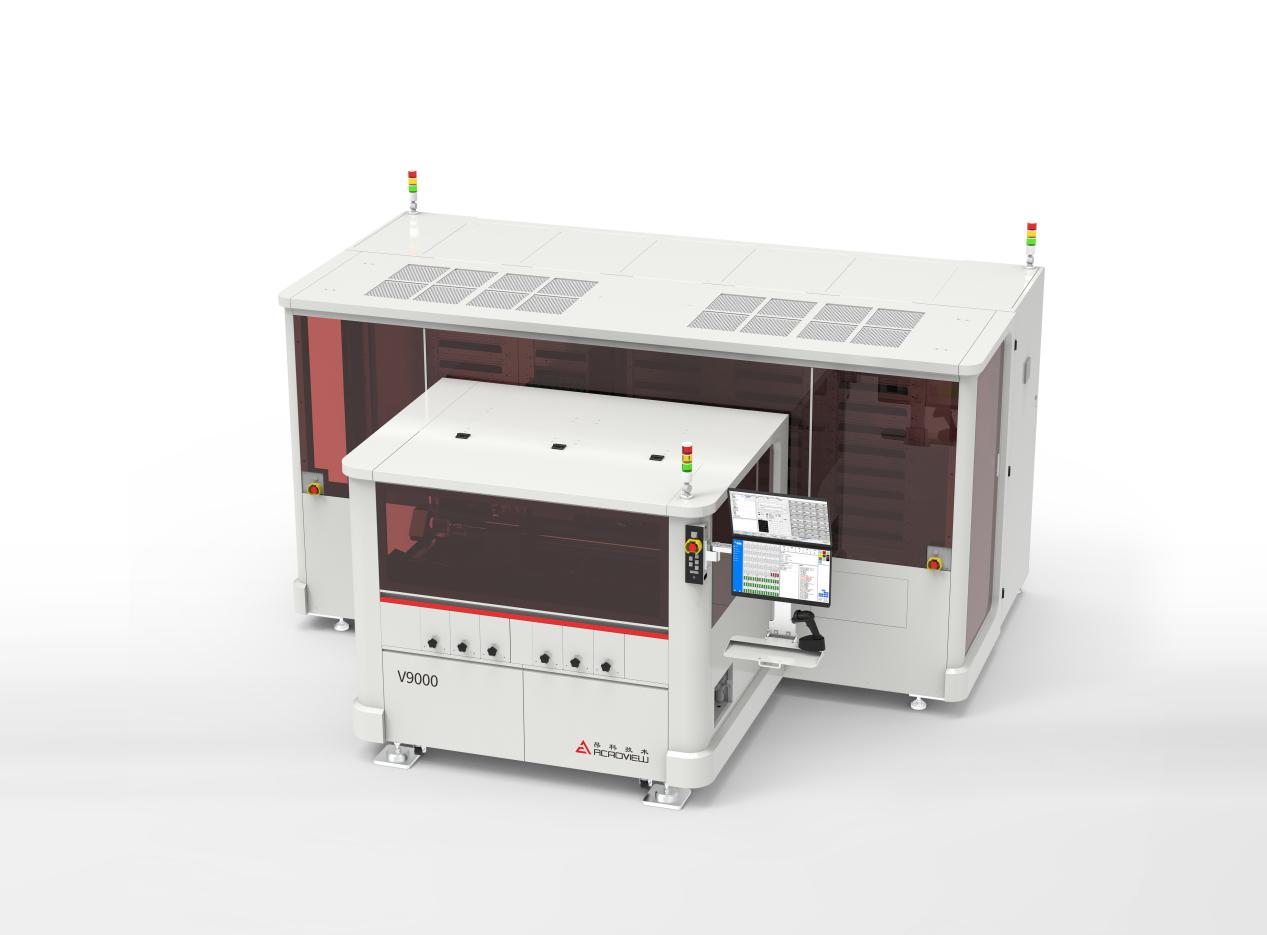
To address these requirements, ACROVIEW has developed the V9000 NAND Flash Test Solution, an automated platform for NAND Flash reliability testing and high-volume device screening.
The V9000 uses a stacked architecture that increases production capacity per unit area by more than 10× compared with conventional configurations. It supports flexible parallel testing from 64 to 3,840 channels, supporting high-volume screening and classification at million-device scale.
The system integrates high-precision temperature and force control. Its temperature range extends from -40°C to 125°C, with temperature-control accuracy of ±3°C and contact-force accuracy of 0.1 N. These capabilities support tri-temperature testing for consumer-grade, industrial-grade, and selected automotive-grade storage applications, helping identify latent failure modes associated with temperature variation.
The platform is designed for rapid line conversion and can be used for both NPI validation and high-volume manufacturing (HVM). Using a common platform for engineering validation and production testing reduces changeover effort, shortens the NPI cycle, and lowers the cost associated with subsequent device iterations.
ACROVIEW also provides turnkey implementation support for storage-module and end-device manufacturers, covering deployment from engineering validation through production and supporting quality control at the device level from the beginning of the production process.
Improving NAND Resource Utilization
When NAND supply is constrained and material costs are elevated, device screening and reliability control affect not only product quality but also how effectively available memory resources can be used.
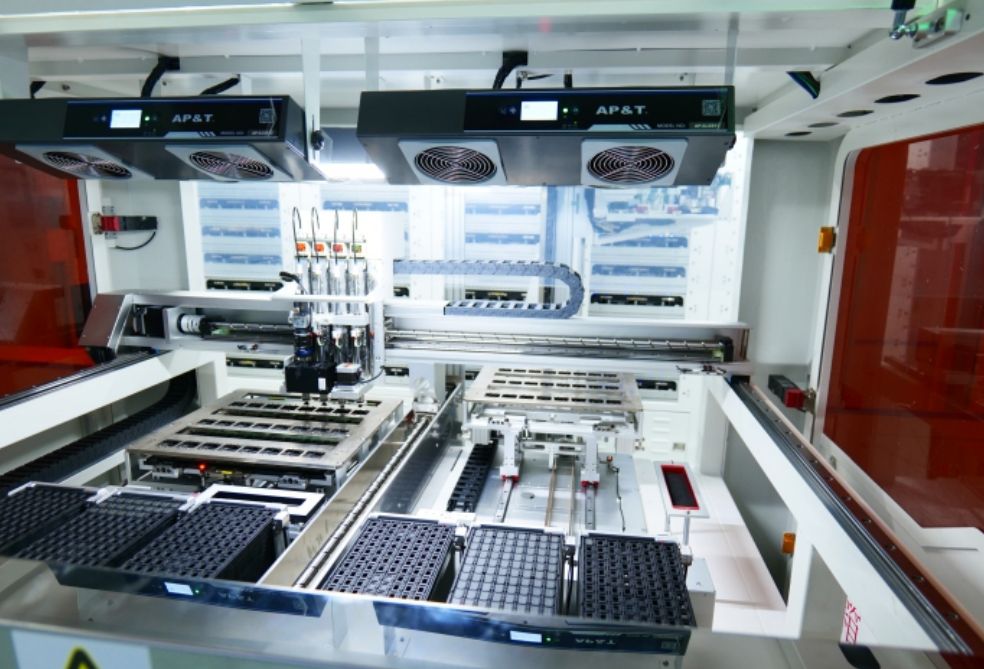
The V9000 integrates tri-temperature testing, bad-block screening, and long-term stability testing to support device classification and early-life failure screening. Devices that do not meet the required criteria can be identified before entering downstream production, helping reduce material loss and after-sales costs while supporting stable production yields.
Device classification also provides a basis for matching NAND devices with different application requirements. This is particularly relevant when manufacturers need to allocate constrained memory resources across consumer, industrial, automotive, and AIoT applications.
By combining reliability screening with device classification, manufacturers can make more effective use of available NAND devices rather than treating all incoming components as equivalent. This approach helps maximize usable NAND resources while maintaining the reliability requirements of downstream products.
Conclusion
The current NAND Flash supply constraint creates challenges beyond simply securing sufficient memory devices. For manufacturers using embedded storage, the ability to screen device quality, identify temperature-dependent and early-life failures, and make effective use of available NAND resources is becoming increasingly important.
Tri-temperature reliability testing provides a practical method for exposing temperature-dependent and latent failures that may not be detected through room-temperature testing alone. Combined with controlled thermal conditions, electrical stress, automated data acquisition, and device classification, it supports reliability screening at the production volumes required for embedded NAND applications.
The ACROVIEW V9000 brings these capabilities together in an automated, high-parallelism testing platform. By combining temperature-controlled reliability testing, device screening, and classification, the platform provides a production-oriented approach to NAND quality control, helping manufacturers reduce material loss, maintain production quality, and maximize the usable value of constrained NAND resources.

- 7F, Hanking Center (SOMA) 9968 Shennan Avenue, Nanshan Dist, Shenzhen, 518052, P.R.C
- sales@acroview.com